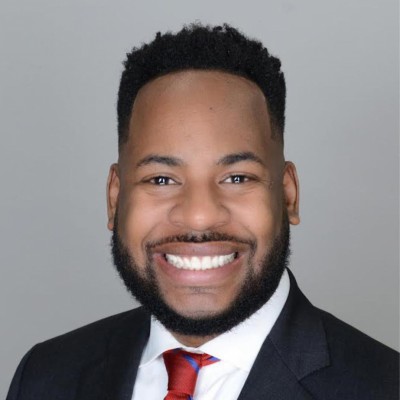
When Jerell Blakeley walks through the headquarters of the Ohio Education Association in Columbus, he carries with him an unmistakable sense of forward motion. It’s not the hurried pace of someone overwhelmed by responsibility. It’s the steady, deliberate energy of a leader who believes deeply in where he’s going—and in the people he’s going with.
At 38 years old, Blakeley is stepping into one of the most consequential union leadership roles in the Midwest as the Ohio Education Association’s new Assistant Executive Director–Program. But if you ask him what he plans to do, he doesn’t begin with bullet points or policy jargon. He begins with hope.
“Ohio has a chance to be a model for what a 21st-century public education system can look like—collaborative, innovative, joyful, and anchored in the dignity of the profession,” Blakeley says, settling into a chair with the reflective ease of someone who knows that optimism is not naïveté, but strategy.
His vision is sweeping yet grounded. It’s not about slogans but about restoring something fundamental: belief—belief that schools can unite communities, that policy can elevate rather than constrain, and that educators can lead the way into a brighter future.
ROOTS: A JOURNEY SHAPED BY POSSIBILITY
Blakeley’s ascent to this moment didn’t begin in Columbus. It began in Trenton, New Jersey, where he grew up surrounded by complexity, contradiction, and community strength. Trenton—its grit, its beauty, its activism—sharpened his sense of purpose long before he had the vocabulary for it.
“As a kid in Trenton, I learned that schools aren’t abstract institutions,” he reflects. “They’re the heartbeat of neighborhoods. They’re where dreams get encouraged—or quietly crushed.”
From Trenton, he carried not only ambition but gratitude. He remembers classrooms full of expectation, teachers who demanded excellence, and adults who insisted that public education could transform lives.
Those early experiences led him directly into teaching. Standing in front of students, he learned the weight of responsibility and the power of presence. “Teaching changed me,” he says. “It made me understand that hope is a discipline. You have to practice it, especially on the hard days.”
INDIANAPOLIS: WHERE HOPE EVOLVED INTO LEADERSHIP
By the time Blakeley arrived in Indianapolis, he carried both the heart of a teacher and the instincts of an organizer. Indianapolis refined something essential in him: a leadership style rooted in empathy, courage, and coalition.
His years there were productive and meaningful—relationships flourished, programs expanded, and a diverse community embraced him as both a collaborator and a convener. But when he talks about Indianapolis now, he speaks less about accomplishments and more about what the city taught him.
“Indianapolis stretched me. It gave me a deeper understanding of people—their stories, their struggles, their pride. It taught me how to lead not from ego, but from service.”
He lights up when discussing Indiana educators: “They’re resilient, brilliant, and deeply committed to kids. Being part of that community was one of the great blessings of my career.”
Indianapolis didn’t harden him. It expanded him. It revealed that even in polarized climates, progress is possible when people feel seen and trusted. It instilled in him a confidence and emotional maturity that now guide him into his next chapter.
THE NJ WEC CHAPTER: A DIFFERENT KIND OF EDUCATION
Another defining period in Blakeley’s life came at the New Jersey Work Environment Council, an organization at the intersection of labor rights, environmental justice, worker safety, and community advocacy.
There, he learned to think structurally—to understand systems not only as they are, but as they should be. The experience was equal parts intellectual and personal. “WEC taught me that you don’t need to accept the status quo,” he says. “You can design something better.”
He still speaks of that chapter with pride. “It opened my eyes to how broad the fight for dignity really is. Schools, workplaces, communities—they’re all connected. And when you lift one, you lift all.”
ARRIVING IN OHIO: HOPE AS A STRATEGY
To understand why Blakeley is so energized by his new role in Ohio, you need to understand what he sees—not just the challenges, but the extraordinary potential.
Ohio, in his view, is a place full of possibility. A state with urban innovation, suburban stability, and rural pride. A state with educators who care deeply about kids and communities. A state ready for a new story.
“I didn’t come to Ohio to replicate anything I’ve done before,” he says.
“I came because I believe Ohio can lead the nation.”
His hopes for OEA are expansive, imaginative, and deeply human. They center on four pillars:
1. A New Culture of Collaboration
Blakeley envisions an OEA where departments work like a symphony—each section distinct yet harmonized.
“When people collaborate with trust, creativity explodes.”
His hope is to cultivate a culture where ideas flow freely, where educators feel heard, and where advocacy becomes a collective, joyful act of leadership.
2. A More Human Approach to Policy
For Blakeley, policy is not a spreadsheet—it’s the story of a child, a classroom, a community.
“I want us to talk about policy the way educators talk about students—with understanding, with nuance, with heart.”
He hopes to elevate educator experiences so powerfully that lawmakers feel compelled to act with conscience and clarity.
3. A New Era of Storytelling
He envisions OEA becoming one of the most compelling communicator organizations in the nation, telling the stories of Ohio educators with dignity and depth.
“There is nothing more powerful than a teacher’s story,” he says. “We need the public to feel what educators feel.”
He hopes to amplify stories that shift narratives from crisis to possibility.
4. A Future Where Educators Lead the Way
Perhaps most central to his vision is this: empowering educators as architects of their own profession.
“Educators shouldn’t be passengers in the policy process—they should be the drivers.”
He imagines a future where educators are not only celebrated, but truly consulted; not only supported, but elevated; not only defended, but positioned as leaders of statewide change.
THE POWER OF OPTIMISM
In an era when cynicism dominates political conversation, Blakeley’s optimism is almost subversive.
He laughs when asked why he remains hopeful. “Hope is the most radical thing you can offer right now,” he says. “But it’s also the most practical. Nothing meaningful has ever been built without it.”
His optimism is not blind. It is intentional—what scholars call radical hope. A hope rooted in clarity, in lived experience, and in the belief that people want a better world for their children.
“What I love about Ohio,” he says, pausing for emphasis, “is that people here believe in possibility. They want to build something. And I want to help them build it.”
THE PERSONAL SIDE OF LEADERSHIP
Blakeley’s leadership is not abstract. It’s shaped by the people and places that gave him confidence, compassion, and courage.
From Trenton, he carries resilience.
From teaching, he carries empathy.
From NJ WEC, he carries structural insight.
From Indianapolis, he carries maturity and service.
And now, in Ohio, he carries hope.
He talks often about gratitude—for family, mentors, educators, and communities that nurtured him.
“The truth is, everything I do is a thank-you to the people who believed in me.”
It’s an anchor that keeps him grounded, even as his influence grows.
A LEADER FOR THIS MOMENT
Those who work with Blakeley describe him as steady, reflective, and deeply mission-driven. He listens more than he speaks. He asks good questions. He values people. And he leads softly—but powerfully.
He is, in many ways, the kind of leader public education needs now: someone who believes deeply in educators, who sees both the challenges and the possibilities, and who carries both with humility.
“Ohio has extraordinary teachers,” he says. “They deserve extraordinary support. My hope is that my leadership helps create the conditions for them to thrive.”
A FUTURE FULL OF LIGHT
As Ohio stands at a crossroads—politically, culturally, economically—Blakeley’s arrival feels like a renewal of possibility. Not because he promises quick fixes, but because he offers something more durable: hope paired with strategic imagination.
His aspirations are not small.
He hopes to build bridges.
He hopes to strengthen public trust.
He hopes to elevate educator voice.
He hopes to unify communities.
He hopes to inspire new leaders.
He hopes to help Ohio become a model of what public education can be.
“My dream is that five years from now, people look at Ohio and say, ‘Something special happened there.’
Something bold, something collaborative, something human.”
He smiles, then adds:
“And I want OEA to be at the heart of it.”
This is what makes Blakeley not just an executive, but a visionary: his belief that positive change isn’t only possible—it’s inevitable when people lead with courage, compassion, and purpose.
And as he begins this new chapter in Ohio, there is one thing certain:
The future looks bright.
Very bright indeed.